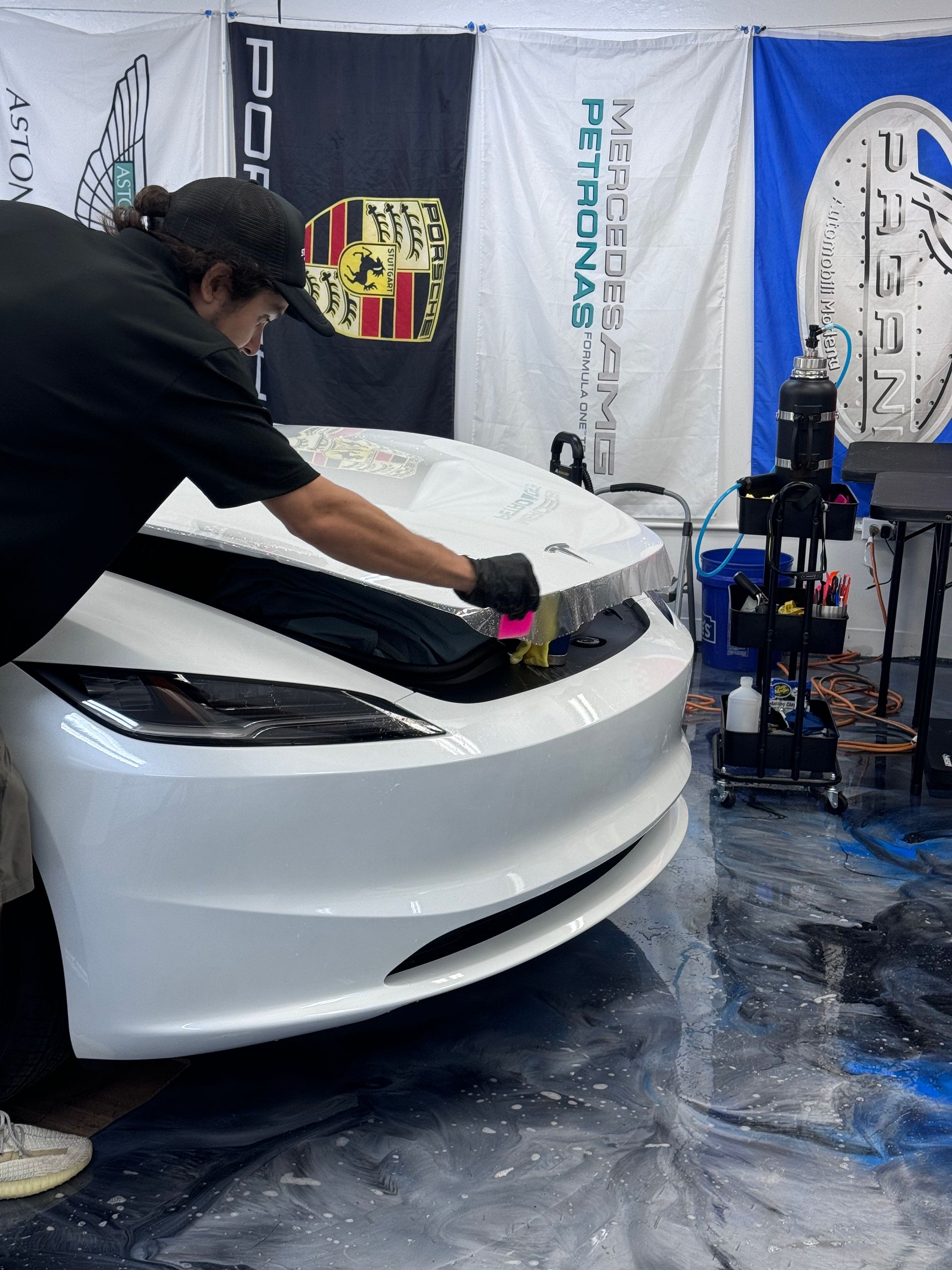
Protecting your car's paint from the hazards of daily driving is crucial, and selecting the right thickness of paint protection film (PPF) plays a significant role. Balancing durability, clarity, and ease of installation ensures your vehicle remains shielded without sacrificing its appearance — whether you're navigating Oahu's highways or keeping a weekend car showroom-clean.
In this guide, we'll cover why PPF thickness matters, what key attributes to look for, and how to choose the best solution for your vehicle.
Why PPF Thickness Matters
The thickness of paint protection film determines its ability to guard against road debris, scratches, and environmental damage. Most high-quality TPU films fall within a range of 8 mil (203 microns) to 10 mil (250 microns).
8 Mil (203 Microns)
A versatile option offering excellent protection against minor chips, scratches, and everyday wear. Its flexibility makes it easier to apply on curved surfaces and complex panel geometry.
10 Mil (250 Microns)
Ideal for high-impact areas like front bumpers and hoods. This thicker film provides maximum defense but requires professional expertise for a flawless installation result.
Your choice should depend on your driving habits and exposure to road hazards. Daily commuters and highway drivers may benefit from thicker films on impact zones, while lighter-use vehicles may not need the added mass everywhere.
Key Attributes of High-Quality Paint Protection Film
Not all PPFs are created equal. Consider these features when evaluating your options:
1. Clarity and Transparency
A premium PPF should be nearly invisible once applied, preserving your vehicle's original color and finish. Films with advanced optical clarity ensure your car looks just as sleek after installation as before.
2. Self-Healing Properties
Many modern TPU films feature self-healing technology, which allows minor surface scratches to disappear with heat exposure. This reduces the need for frequent touch-ups over the life of the film.
3. UV Resistance
Films with UV-resistant properties prevent yellowing and protect your vehicle's paint from sun damage — critical in Hawaii, where UV intensity is among the highest in the country. Both the film and your car's finish stay cleaner, longer.
4. Durability
The lifespan of a high-quality PPF typically ranges from 5 to 10 years depending on the brand, installation quality, and maintenance. Durable films resist road debris, environmental contaminants, and everyday wear — making them a worthwhile long-term investment.
Evaluating Thickness Variants
Standard Thickness (8 Mil)
- Offers a balance of flexibility and protection suitable for most vehicles
- Handles common road hazards including gravel, bugs, and light abrasion well
- Easier to apply on compound curves and tight body lines
Thicker Films (10 Mil)
- Provides extra defense for high-impact areas like front bumpers and hoods
- Recommended for vehicles exposed to rough terrain or extensive highway driving
- Requires professional installation due to added rigidity
Enhancing Protection Through Layering
For maximum defense, combining PPF with a ceramic coating creates a multi-layer approach. The ceramic layer on top of the film provides additional gloss, hydrophobic performance, and resistance to chemical contaminants — and extends the effective life of both products. This is standard practice on most of our builds at Standard Paint Protection.
Looking for a seamless alternative? If visible seams or edge lines concern you, ask us about Liquid PPF by NanoPro — a hybrid polyurethane-acrylic coating that's applied as a liquid, eliminating cut lines entirely.
Professional Installation vs. DIY
While DIY kits exist, professional installation is strongly recommended for achieving a long-lasting, seamless result. A professional installer ensures the film is applied without bubbles, creases, or misalignment — all of which affect long-term performance and appearance.
At Standard Paint Protection, every install follows a rigorous preparation process: surface decontamination, clay bar treatment, panel-by-panel masking, and installation in a clean environment. We use pre-cut patterns to minimize razor contact with paint wherever possible.
We install STEK DYNO-shield and Scorpion Sentry TPU films, and our team is a certified NanoPro installer on Oahu for Liquid PPF systems. Whatever your vehicle needs, we'll help you find the right coverage.