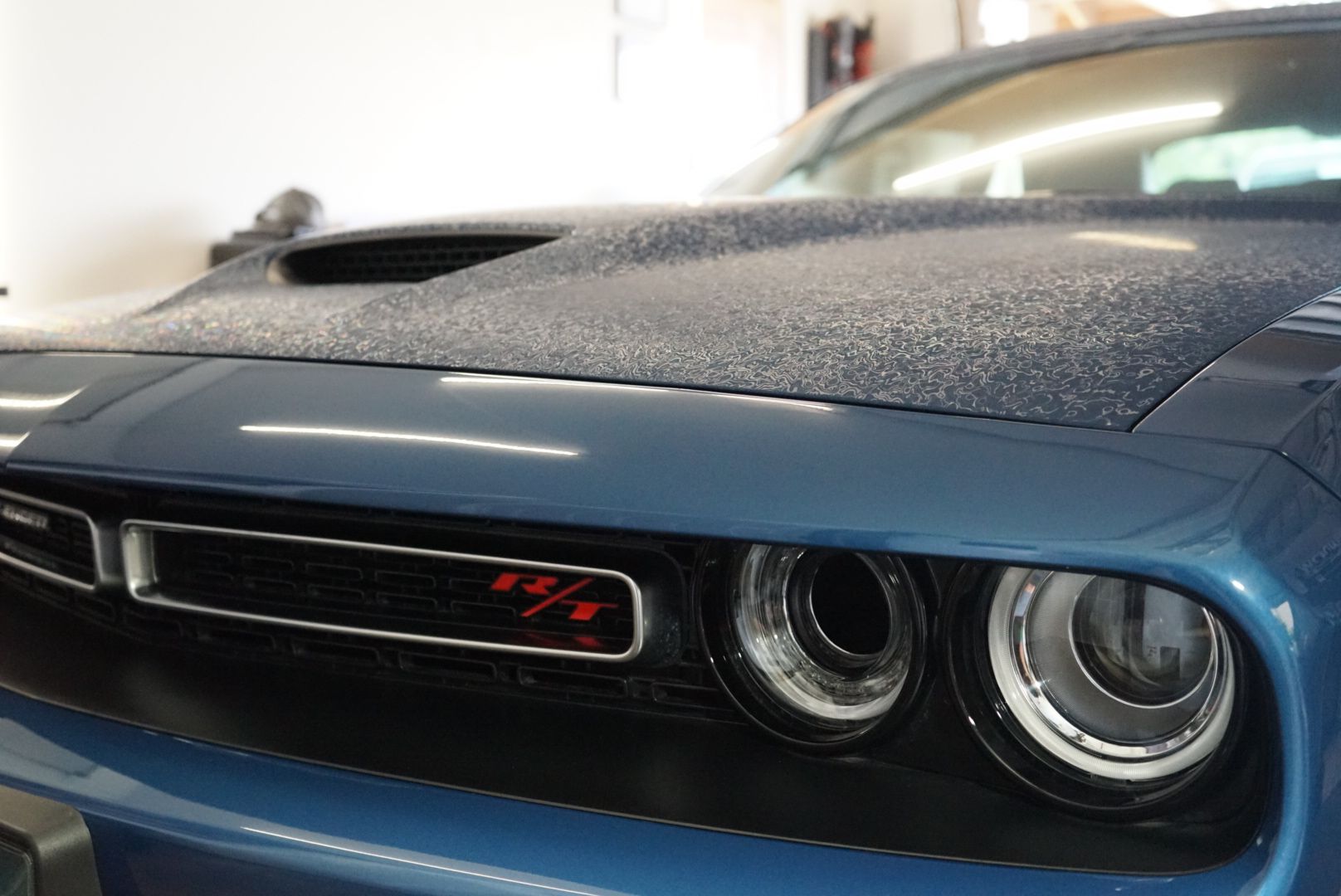
When it comes to protecting the exterior of your vehicle, two options come up most often: paint protection film (PPF) and vinyl wrap. Both cover painted surfaces, but they serve very different purposes. Knowing the difference will help you choose the right solution for your vehicle and your goals.
Paint Protection Film (PPF)
Paint protection film — sometimes called clear bra — is a thin, transparent thermoplastic urethane film applied to painted surfaces. It's engineered specifically to protect the paint from physical damage: road debris, abrasion, minor impacts, UV rays, and chemical contaminants. The film is nearly invisible once installed, preserving the vehicle's original color and finish.
PPF is available in a range of thicknesses (typically 8–10 mil), and many premium films feature self-healing topcoats that allow minor surface scratches to disappear with heat. The goal is preservation — keeping the paint underneath looking exactly as it did on day one.
Benefits of PPF
- Superior protection against road debris, abrasion, UV rays, and chemical exposure
- Nearly invisible — maintains the vehicle's original factory color and appearance
- Long-lasting — quality films resist fading, cracking, and yellowing for years
- Easy to maintain — wash and care for it just like the underlying paint
- Preserves resale value — keeps paint in showroom condition longer
Vinyl Wrap
Vinyl wrap is an adhesive-backed film available in a wide range of colors and finishes — gloss, matte, satin, chrome, and more. It's primarily a cosmetic product, used to change or customize the look of a vehicle without a full repaint. Vinyl wrap offers some surface-level protection against minor scratches, but it isn't engineered for impact resistance or UV-specific protection the way PPF is.
Benefits of Vinyl Wrap
- Customization — completely change your vehicle's color or finish without paint
- Reversible — can be removed, returning the vehicle to its original color
- Some scratch resistance against light surface contact and minor abrasion
- Cost-effective compared to a full respray for color changes
Side by Side
Paint Protection Film
- Primary purpose: protection
- Nearly transparent — no color change
- Resists impacts, UV, chemicals
- Self-healing topcoats available
- 5–10+ year lifespan
- Preserves factory finish & resale value
Vinyl Wrap
- Primary purpose: appearance change
- Available in hundreds of colors & finishes
- Light scratch and scuff resistance
- Reversible — remove to restore original
- 3–7 year lifespan (varies)
- Lower cost for full-color change
Which Is Right for You?
If your goal is to protect your vehicle's paint — against road debris, UV damage, and everyday wear — PPF is the right choice. It's an investment in the long-term condition of your paint, and it's especially valuable in Hawaii where UV intensity and coastal salt air accelerate paint degradation.
If your goal is to change how your vehicle looks — a different color, a matte finish, a custom look — vinyl wrap is the tool for that. It's not a substitute for PPF, but it serves a different purpose entirely.
For vehicles where both protection and appearance matter, some owners do both: PPF on high-impact areas (front bumper, hood, mirrors) and vinyl wrap on body panels for a color change. It's worth discussing your specific goals with an installer before deciding.
Looking for a seamless option? If you want protection without any visible film edges or seams, ask us about NanoPro Liquid PPF — applied as a liquid, cured into a uniform protective coating with no cut lines and no edge lifting concerns.