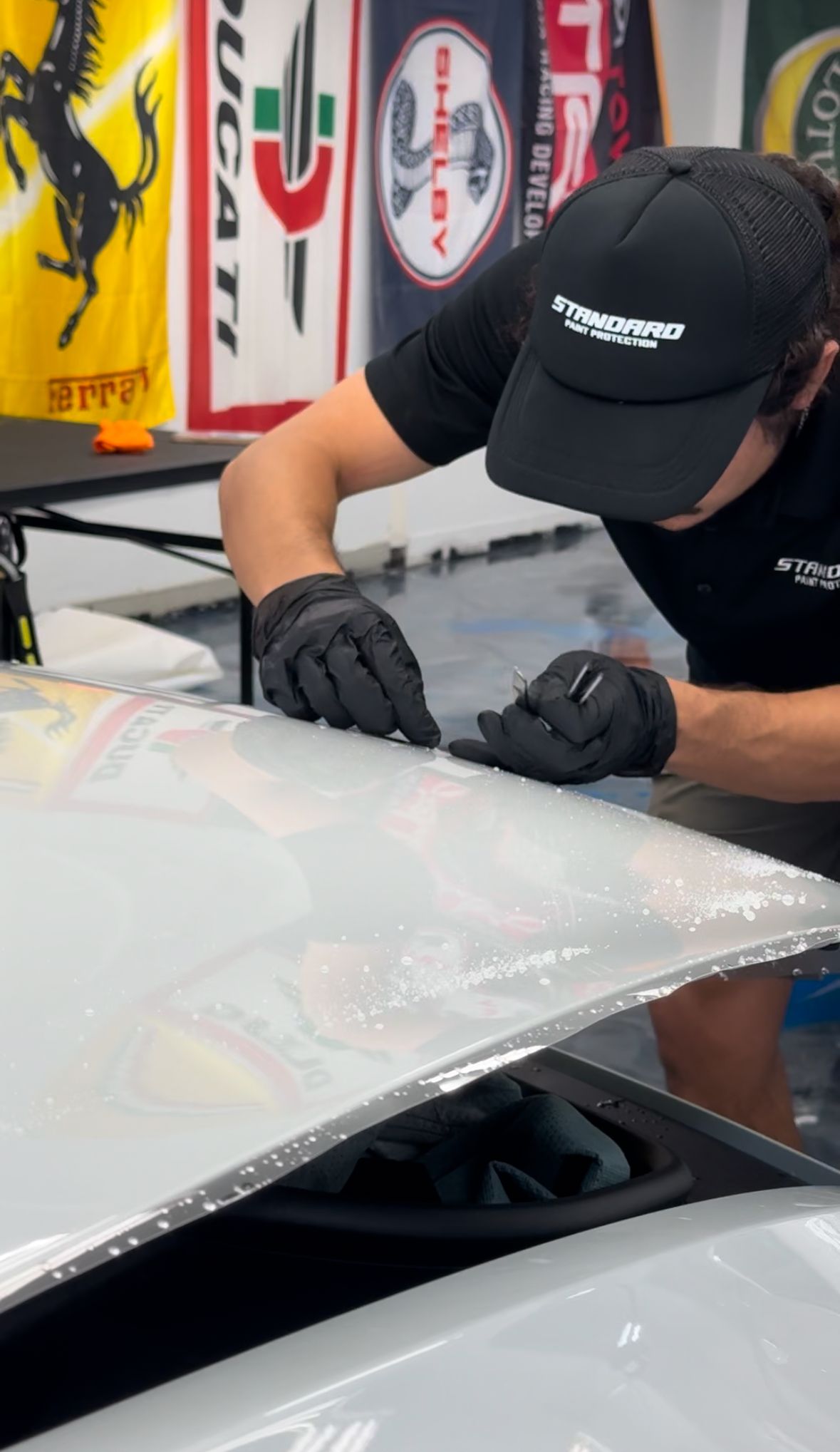
The majority of paint defects we see in the shop — swirl marks, micro-scratches, fine marring — don't come from road debris or accidents. They come from improper washing. The tools people use and the technique they follow during a routine wash can do more damage over time than anything else the car encounters.
Ceramic coatings and paint protection film both make maintenance easier, but they don't make bad wash technique safe. Here's the correct process — the same one we follow at Standard Paint Protection and the one we recommend to every client who wants their coating performing at its best.
What You'll Need
What to Get Rid Of
Stop using these immediately: Household sponges, chamois ("shammy") cloths, and brushes collect grit and drag it across your paint surface on every stroke — creating swirl marks that compound over time and eventually require machine polishing to remove. Neither of these belongs near your vehicle.
The issue with sponges is surface area: a sponge has a flat contact face that traps dirt particles and holds them against the paint under pressure. A microfiber wash mitt's long fiber pile suspends the mitt away from the paint surface, so trapped grit falls into the fibers rather than grinding across the clear coat.
Chamois "shammy" cloths have a similar problem — they contact the paint directly with very little fiber lift, and they generate significant static that attracts fine dust particles. They dry well, but they're one of the leading causes of the light swirl marks you see at certain lighting angles on cars that look clean from a distance.
The 7-Step Wash Process
-
Snow foam pre-wash Apply snow foam solution with a foam cannon to the entire vehicle. This step loosens and suspends surface contamination — road grime, dust, salt — before any contact with the paint. Allow 2–3 minutes of dwell time, then rinse thoroughly. The goal is to remove as much loose contamination as possible before you touch the car.
-
Two-bucket hand wash with grit guard Fill one bucket with clean wash water and shampoo, one with clean rinse water. Both should have grit guards at the bottom. Wash a section of the car, rinse the mitt in the rinse bucket against the grit guard before reloading with shampoo, and repeat. This keeps contamination out of your wash solution and prevents grit from going back onto the paint.
-
High-pressure rinse Rinse the vehicle thoroughly with a hose or pressure washer. Work top-down to carry loosened contaminants off the surface without dragging them back across paint you've already cleaned.
-
Dry with a microfiber weave towel Use a dedicated microfiber weave drying towel — not a chamois. Blot or drag gently rather than rubbing. The waffle-weave structure lifts water away from the surface without the direct abrasive contact of a flat cloth. Never use chamois; that's one of the major causes of swirl marks on otherwise well-maintained paint.
-
Iron remover (monthly or as needed) Apply an iron removing agent to dissolve any bonded iron particles — brake dust, industrial fallout — that have embedded in the paint or coating. These particles are invisible when dry but appear as orange or brown specks when the iron remover makes contact. They cause surface staining and oxidation if left untreated.
-
Clay bar treatment (as needed) Apply a fine or medium grade clay bar with clay lubricant to remove above-surface contamination that the iron remover doesn't address — overspray, tree sap residue, mineral deposits. Run your hand over a decontaminated, dry panel — if it doesn't feel like glass, it needs clay.
-
Paint thickness check before correction (for serious defects) If your vehicle needs machine polishing — swirl marks, scratches, surface oxidation — measure paint thickness with a paint thickness gauge first to confirm there's enough clear coat to work with. This step is critical before any professional correction work.
Already coated? If your vehicle has a ceramic coating, proper wash technique is even more important — not because the coating is fragile, but because the coating amplifies everything. A clean, properly maintained coating looks dramatically better than one that's been swirled up by poor wash technique. The two-bucket method is the standard regardless of what's on the paint.
One Final Note
Protecting the paintwork you start with via paint correction and ceramic coating is only part of the equation. Maintaining it properly afterward is what makes that investment last. The wash process above adds maybe 15 minutes to a regular wash routine. The swirl marks it prevents can take hours of machine polishing to fix.