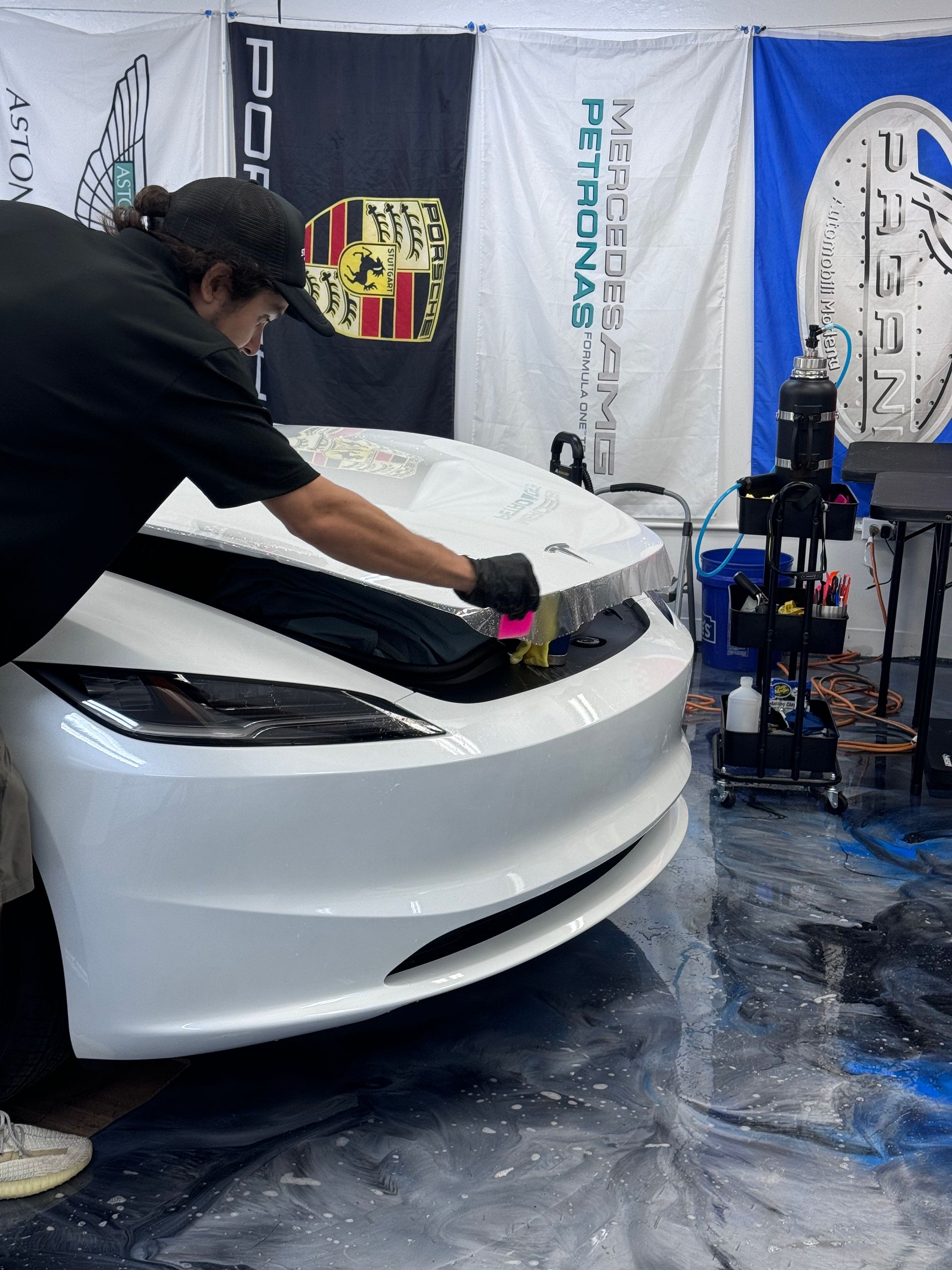
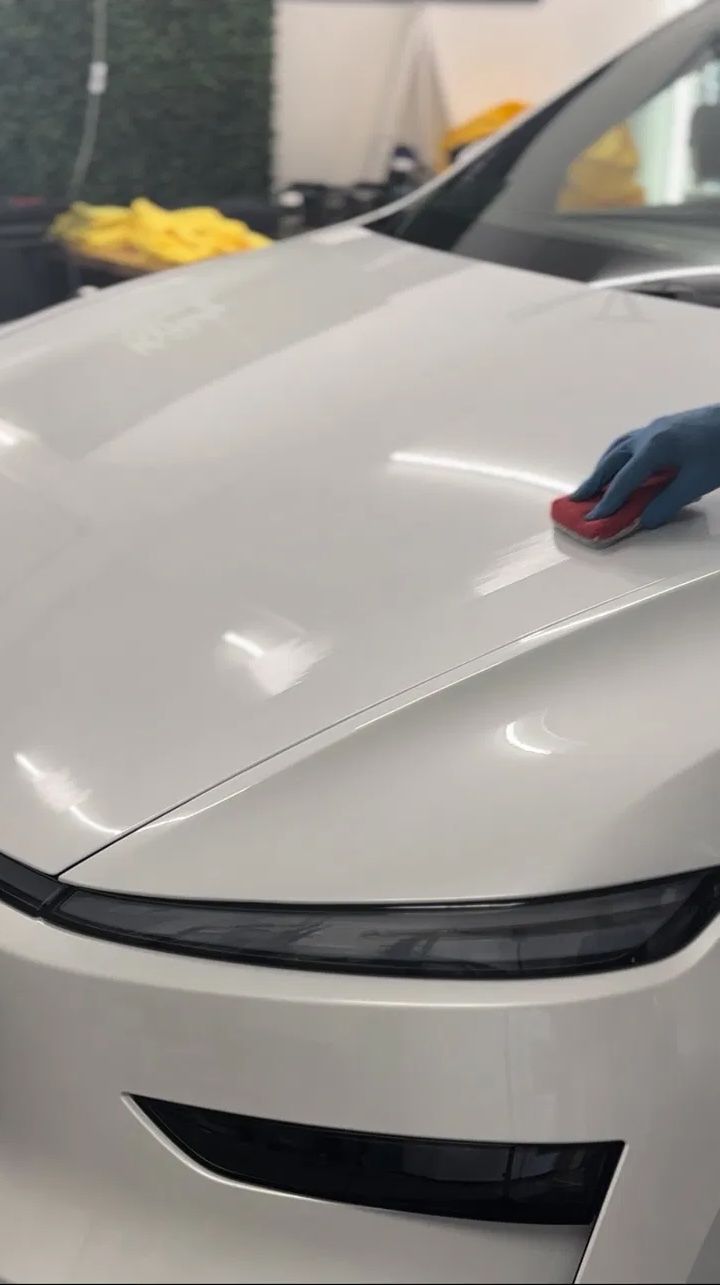
Neither traditional TPU film nor Liquid PPF makes your paint indestructible. TPU is a sacrificial layer with a service life — it's designed to take the wear so your factory paint doesn't have to, and it may eventually need maintenance, repair, or full removal and replacement. LPF takes a different approach by bonding directly to the paint rather than sitting as a removable sheet on top of it. Both systems exist to preserve your factory finish for as long as possible, not to promise a one-time fix that eliminates all future cost or care.
| Factor | NanoPro Liquid PPF | Traditional TPU Film |
|---|---|---|
| Application method | Liquid — cures to paint surface | Cut film — plotter required |
| Visible edges | None — seamless coverage | Visible at panel transitions |
| Seam contamination | No seams — continuous layer | Can collect along film edges over time |
| Edge lifting | Not applicable — bonded to paint | Possible at high-stress areas over time |
| Service life / future removal | Not required under normal conditions | Sacrificial layer — eventual removal and replacement expected |
| Warranty | 10 years standalone — extended coverage when stacked | Varies by brand and installer |
| CARFAX registration | Yes — every installation | Not standard |
| Stackable with ceramic | Yes — designed for LPF + ceramic stack | Some brands compatible |
| Availability on Oahu | NanoPro Certified installers only | Multiple shops |
| Cutting on paint | None | Required for installation |
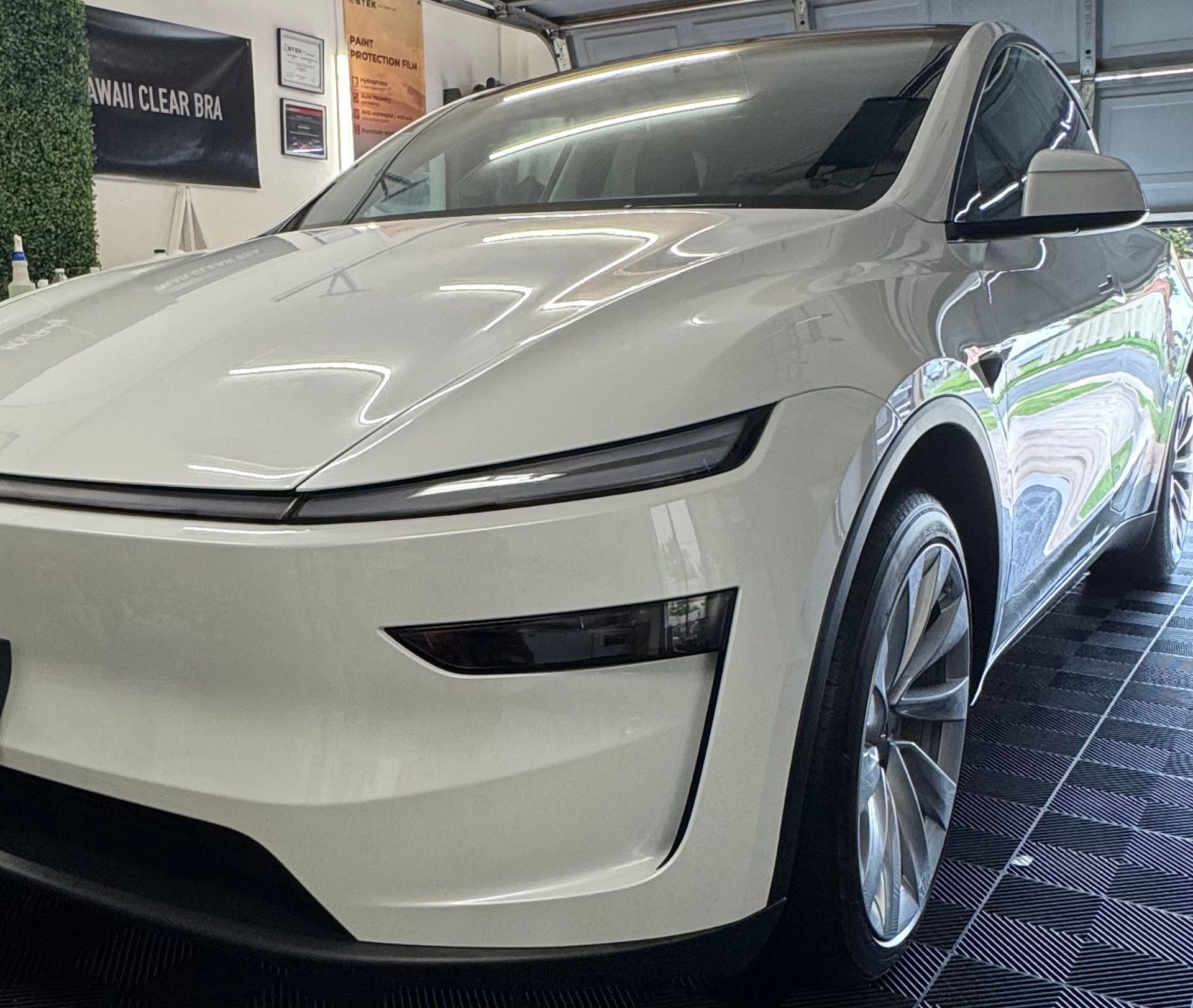
Why We Recommend LPF for Most Hawaii Clients
Hawaii's environment — UV index 11+, salt air, hard water, and vog — can make the long-term maintenance considerations of traditional film more noticeable over time. Edge maintenance, seam contamination, and eventual removal become important ownership considerations in a climate that accelerates wear on all exterior surfaces.
NanoPro LPF bonds directly to your paint and cures into a continuous protective layer. There are no edges to lift, no seams to contaminate, and no removal process to plan for. The result is a clean, uniform finish that's non-removable under normal ownership conditions and requires no more maintenance than the ceramic coating stacked on top of it.
For clients who have been researching traditional PPF and are open to understanding the alternative — we're happy to walk through the differences in person. No pressure. Just an honest comparison based on your vehicle, your goals, and how you use it on Oahu.
Consider Liquid PPF If…
You want seamless coverage with no visible film edges or panel seams. Your vehicle has complex curves, body lines, or specialty paint where traditional film edges would be noticeable. You want a long-term solution that doesn't require future removal or replacement under normal conditions. You want the ability to stack LPF with a ceramic coating for complete front-to-back protection under a single extended warranty.
Most clients who come to us specifically asking for NanoPro LPF are Tesla, Porsche, and luxury vehicle owners who have researched the difference and want the cleanest possible result.
Consider Traditional TPU If…
You have a specific need for thick-film physical protection on a high-impact vehicle that sees extreme road conditions. You understand TPU is a sacrificial layer with a service life, and you're comfortable planning for eventual maintenance, repair, or replacement as part of normal ownership. You're protecting a vehicle that will be resold or returned and want a removable protection solution.
For collector vehicles, exotics, rare-production models, or owners who specifically want a removable sacrificial layer protecting original factory paint, traditional TPU film may remain the preferred solution.
Traditional TPU film has a long track record and remains a valid option for the right application. Because we evaluate every vehicle by inspection first, we'll always tell you honestly whether it's the right fit for your specific situation.
770 Kapiolani Blvd, Honolulu HI 96813 | Kapolei Studio by Appointment | michael@standardpaintprotection.com