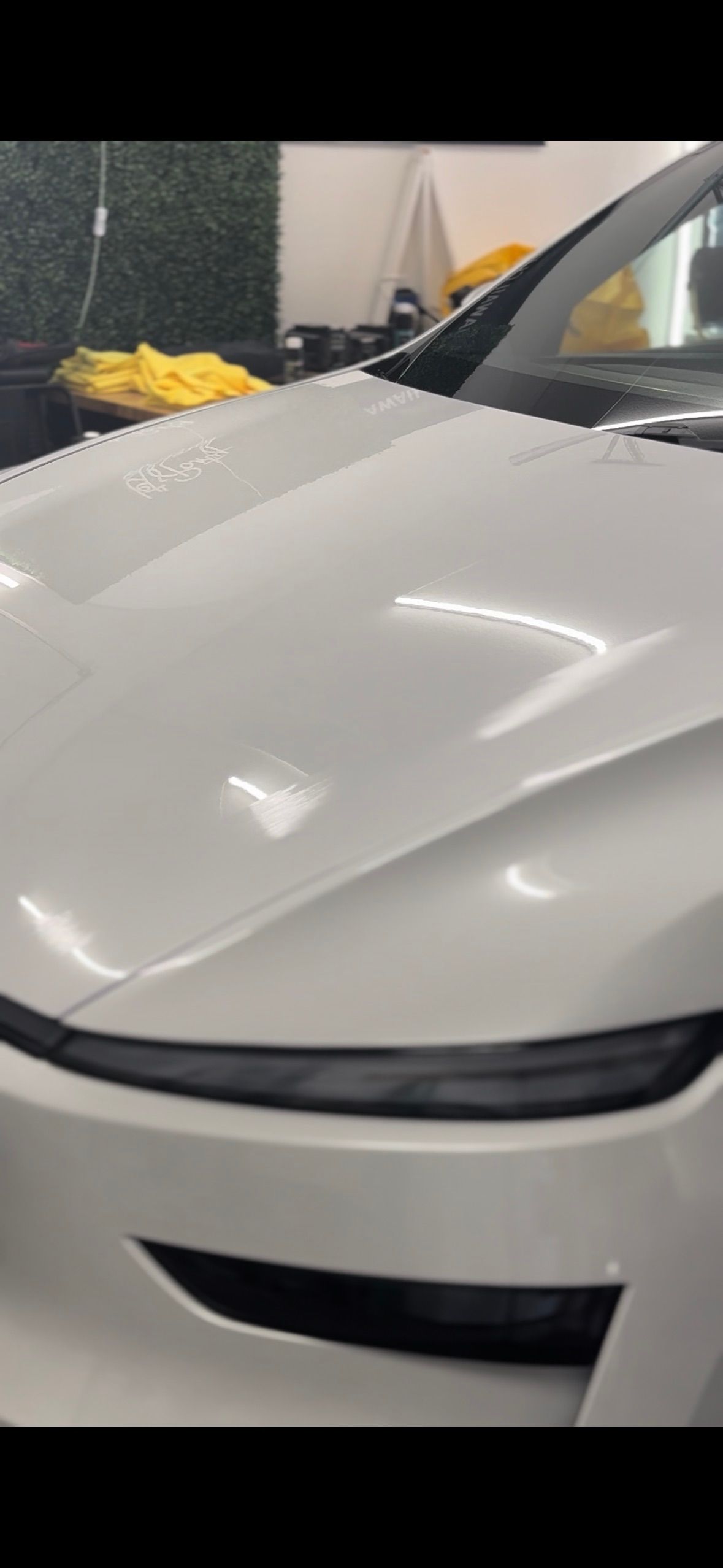
A ceramic coating is a liquid polymer applied by hand to the exterior surfaces of a vehicle. It chemically bonds to the factory paint, creating a durable, semi-permanent layer of protection that goes far beyond what wax or sealant can offer. Once cured, it becomes part of the surface — not just a temporary coating sitting on top of it.
The chemistry behind most professional-grade coatings is silicon dioxide (SiO2) — a compound that forms an extremely hard, hydrophobic surface when cured. Some formulations also incorporate titanium dioxide (TiO2), ceramic particles, or other compounds that enhance hardness, UV resistance, or longevity.
What a Ceramic Coating Does
A ceramic coating forms a physically present protective layer over your clear coat. It's not invisible — it has measurable thickness and hardness. Here's what that layer does in practice:
- Hydrophobic performance — water beads aggressively and sheets off cleanly, taking surface contaminants with it. This makes the vehicle dramatically easier to wash and maintain.
- Chemical resistance — the coating resists bird droppings, tree sap, brake dust, and other acidic or alkaline contaminants that would otherwise etch into clear coat over time.
- UV protection — ceramic coatings block UV radiation from reaching the paint below, slowing oxidation and preventing the fading that's accelerated by Hawaii's sun.
- Enhanced gloss — the flat, optically clear ceramic layer sits uniformly over the paint surface, amplifying depth and reflectivity significantly over bare clear coat.
- Scratch resistance — ceramic does not make a car scratchproof, but it adds measurable hardness (rated on the 9H pencil scale for professional-grade products) that helps the surface resist light contact and wash-induced micro-scratches.
What a Ceramic Coating Is Not
It's worth being clear about what ceramic can't do. It does not protect against significant physical impacts — rock chips, door dings, or abrasion heavy enough to break through the coating. For that kind of protection, you need paint protection film. Ceramic also won't make your car scratch-immune — it raises the threshold, but aggressive contact will still damage it.
Ceramic is a surface protection and maintenance tool, not a structural shield. The two work best in combination: PPF on high-impact areas for physical protection, ceramic over the top for contamination resistance and gloss.
Professional vs. Consumer-Grade Coatings
Professional ceramic coatings require controlled application conditions, proper paint preparation (correction if needed, panel wipe-down, IPA removal), and curing time — typically 12–24 hours before the vehicle can get wet, and several days to reach full hardness. They're not the same product as the consumer spray-on "ceramic wax" products you'd find at auto parts stores.
At Standard Paint Protection, we apply EVO PRO Quartz 10H+ and EVO PRO Titanium from Glossit — professional-grade SiO2 coatings with multi-year protection and CARFAX-registered warranties. We also apply Borophene and Borograph by NanoPro for clients seeking a permanent lifetime coating system.
Frequently Asked Questions
How long does ceramic coating application take?
For a professional ceramic-only application with proper prep, expect a full day — typically 6–8 hours depending on the vehicle's condition and whether paint correction is involved. The coating itself cures over the following 12–24 hours before the car can be driven in rain or washed. Allow several days for full hardness.
How long does a ceramic coating last?
It depends on the product, application quality, and how the vehicle is maintained. Professional-grade coatings from Glossit and NanoPro carry multi-year or lifetime warranties with annual inspection requirements. Real-world performance tracks closely with how well the vehicle is maintained — proper wash technique matters significantly.
Can you ceramic coat plastics, wheels, and glass?
Yes. Ceramic coatings bond well to most exterior surfaces including plastic trim, painted wheels, chrome, and glass. Glass coating specifically creates a strong hydrophobic effect that causes water to bead and clear quickly while driving. We typically coat all exterior surfaces unless a client specifies otherwise.
Does my car need paint correction before ceramic coating?
If there are existing swirl marks, scratches, or oxidation in the paint, yes — those defects will be sealed in under the coating and become more visible, not less. We assess paint condition before every coating job. If correction is needed, we'll discuss the scope and include it in the quote.
Ready to get coated? We apply professional-grade ceramic coatings at our Kakaako studio in Honolulu and our Kapolei facility — both by appointment. Schedule a consultation or call us at (808) 301-7042.